
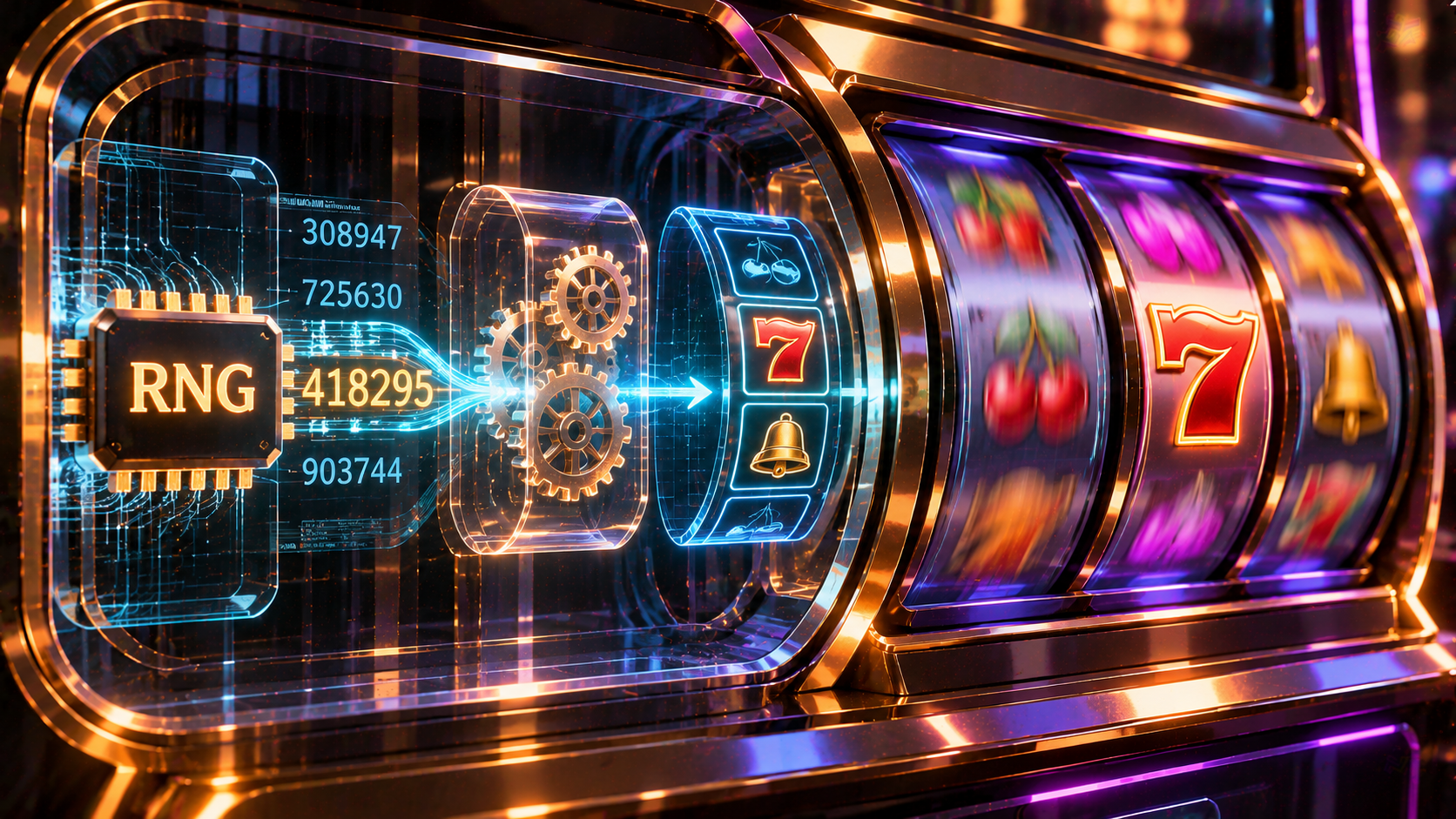
In any online casino lobby, Rooster Casino games included, the reels, cards or numbered outcomes on screen are the visible end of a calculation completed before the animation started. The random number generator (RNG) handled the result. The spinning reels present it. Those are two separate jobs, and confusing them is where most RNG myths begin.
RNG Software Produces a Continuous Stream of Values
Most online casino games use a pseudorandom number generator. The system starts with an internal seed value and runs it through a mathematical algorithm. The output appears random and should be impractical for a player to predict.
The generator runs continuously, even when nobody is pressing the spin button. A player action tells the game which current value to use for that round. Tiny differences in timing lead to different outcomes.
Pseudorandom never means casually invented. It describes numbers created by an algorithm, not a physical event. Quality comes from the algorithm, seed handling, implementation and testing. All four.
The Game Converts Numbers Into Visible Outcomes
An RNG value means nothing until the game maps it to something recognisable. In a slot, it selects reel positions or symbol combinations. In digital roulette, a numbered pocket. In video blackjack, cards drawn from the game’s modelled deck.
The mapping follows the approved game mathematics. Some outcomes appear more often because the probability table gives them more positions. Rare prize symbols occupy fewer combinations. Simple principle. Many numbers.
The Result Is Chosen Before the Animation Ends

Press spin. The game records an RNG result. The reels animate to display the selected symbols. Pressing stop may shorten the animation. It does not change the outcome.
Same with bonus wheels, card reveals and pick features. The prize is determined before the final visual sequence finishes. The animation presents a result that has already been decided.
This is why a slow reel or near-miss is never evidence the game almost changed its mind. It did not. The final reel is doing theatre, not negotiation.
How RNG maps to what appears on screen:
| Game element | RNG role | Visual role |
| Slot reels | Selects the underlying symbol result | Spins and stops on the chosen layout |
| Digital roulette | Selects a numbered outcome | Shows the wheel and ball sequence |
| Video cards | Selects card values under game rules | Deals and reveals the cards |
| Bonus wheel | Selects a prize segment | Animates the pointer or wheel |
| Pick feature | Assigns or reveals available prizes | Opens boxes, cards or objects |
| Instant game | Selects win or loss data | Displays scratches, drops or other effects |
Independent Rounds Have No Memory
Each eligible round is a separate event. Previous spins do not make a future win due. A long losing run can be followed by another loss because the next round uses a fresh selection.
The same applies after a large win. The game does not need to recover the prize from subsequent rounds. Its long-term mathematics works across millions of spins, not across a session.
Players notice streaks because human attention searches for patterns. Several red outcomes or repeated low symbols can look deliberate. Random sequences often contain clusters. Perfectly even spacing would be the suspicious part.
Session History Describes the Past Only
A history panel helps follow completed rounds and confirm results. It provides no forecast for an independent RNG game.
Betting systems based on recent colours, symbols or win frequency do not change the probability table inside the software. They only change the amount risked on the next uncertain result.
RTP Comes From the Paytable, Not the Spin Button
A slot with 96% RTP is designed to return $96 for every $100 wagered across a very large sample. That figure never promises anything for one player, one deposit or one session. Short sessions finish far above or below the theoretical percentage. That is expected.
The RNG creates individual outcomes. The paytable and probability structure shape the long-run return. Changing animation speed does not change the RTP. Neither does the time of day, the size of the previous bet or the player’s mood.
Volatility Shapes the Distribution, Not the Randomness
Two slots can share the same RTP and feel completely different. Lower volatility: smaller prizes, more often. Higher volatility: longer quiet periods, less frequent larger prizes.
The RNG remains random in either case. Volatility comes from the arrangement of probabilities and payouts. It shapes results. It does not make the next round predictable.
The colourful theme matters for enjoyment. The mathematics pays the invoices.
Weighted Outcomes Can Still Be Random
Random does not mean equal. A six-sided die gives equal chances only because each face has the same physical structure. Casino games assign different weights to different outcomes.
A slot might contain many positions for common symbols and very few for a jackpot symbol. The RNG selects from that structure without favouring anyone during a particular spin. Weighted randomness explains why a low-value symbol appears regularly while a top prize stays rare. Both are randomly selected. Their chances are simply not the same.
The useful question is never whether every prize appears equally often. It is whether the RNG selects outcomes according to the approved mathematical design.

Testing Looks for Unpredictability and Correct Distribution
Independent testing laboratories review RNG code, game mathematics and statistical output. They check whether generated values show unexpected patterns, whether outcomes match the declared probability model and whether seeds are handled securely.
Large samples help analysts compare actual output with expected distributions. A normal random sample contains variation, so testing uses statistical ranges instead of demanding perfectly even results.
A certificate has value only when it relates to the software and operator arrangement currently in use. An old logo in a footer says less than a current report tied to a named system.
Game Records Connect the RNG Result to the Account
Each completed round creates a digital record: game title, round identifier, stake, outcome, prize, account balance movement.
If the screen freezes after a wager, the server record determines the official result. The game may reload and show the completed round, or the transaction history may show the outcome. Repeated tapping rarely helps. It mainly gives the device more work.
A player raising a question can provide the round ID, date, approximate time and stake. Support uses those details to locate the recorded result.
RNG Fairness Is Separate From Bonus and Account Rules
A fair game result can sit inside an account with wagering requirements, maximum bets or withdrawal checks. RNG testing covers the outcome mechanism. It does not replace the casino’s payment, bonus or verification terms.
Winning a valid random round and still needing identity checks before withdrawal is not a contradiction. A bonus win subject to conversion caps is not a contradiction either. These are separate systems. Keeping them apart makes any question easier to describe and resolve.
Common Myths Confuse Timing With Control
Games do not become tighter after a withdrawal. They do not pay more at certain hours. They do not react to changes in stake beyond what the paytable describes. A normal RNG does not read the player’s mood, remember a lucky morning or take offence at a cashout request.
Autoplay uses the same game mechanism as manual spins. It submits repeated wagers under selected settings. The rhythm changes. The probability model stays where it was.
A Practical Fairness Check
Players can assess an RNG game through a short review:
- Open the paytable and read the game rules.
- Check the stated RTP and any configurable versions.
- Review volatility or prize-frequency information where available.
- Confirm the game title and provider shown in the account.
- Look for credible testing information tied to the system.
- Keep round IDs when a technical situation occurs.
- Separate game-result questions from bonus or withdrawal matters.
This process does not predict a win. It reveals how the game is intended to operate and what records exist if something needs to be checked.
RNG Matters Because Trust Depends on Unseen Software
Physical casino games show much of their chance process in front of the player. Digital games place that process inside code. The RNG carries most of the trust relationship as a result.
A sound generator produces unpredictable values, maps them through the stated mathematics and records the resulting round. Testing checks the output and implementation. Account history gives the player a trail afterward.
The reels will still tease. Bonus wheels will still pause at exactly the theatrical moment. Underneath, the system remains mathematical: select a value, apply the rules, display the result. Understanding that structure removes several myths, even if it never makes the jackpot arrive on schedule.