
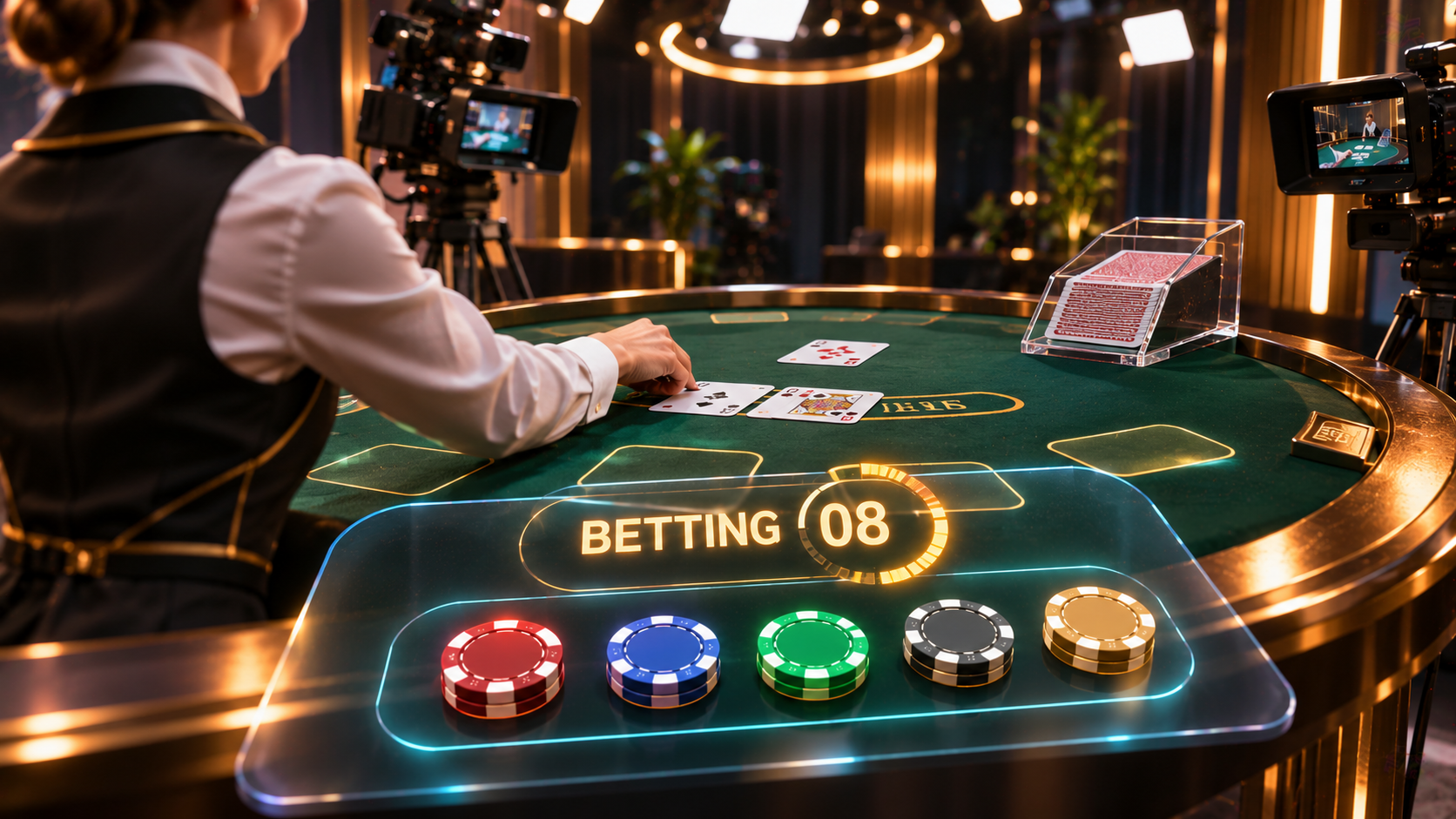
Live dealer tables bring a filmed casino studio to a phone or computer, with a real presenter handling cards, wheels and game equipment while software records every wager. Players exploring live games at Rooster Casino may find blackjack, roulette, baccarat and studio game formats, depending on the account lobby and current catalogue. The screen looks like a broadcast. The betting process is entirely digital. Chips are selected through the interface, bets close on a timer, the casino balance updates after the result is recorded. A dealer can wait for the official countdown. The internet connection has its own personality.
The Studio Supplies the Physical Game
A live table operates from a purpose-built studio or a casino floor equipped for broadcasting. Cameras show the dealer, playing surface and important game equipment. Lighting keeps cards, chips and wheel pockets visible across different devices.
The dealer follows a fixed round sequence. Betting opens, the countdown runs, wagers close and the physical action begins. Cards are dealt or the roulette wheel is spun. Once the result is confirmed, the system settles every accepted digital wager.
Several players can join the same table from different locations. One shared dealer result, private stakes and balances.
Multiple Cameras Keep the Action Readable
A blackjack stream may use a wide view for the table and a closer angle for cards. Roulette tables often show the dealer, wheel and result display. Baccarat can add a shoe camera and scoreboard.
Camera changes are part of the presentation. The official result comes from the table equipment, recognition system and game server.
Digital Controls Sit Beside the Video
The betting panel allows the player to choose chip values and place wagers on the available areas. Roulette layouts include numbers, colours, columns and outside bets. Blackjack offers betting positions and decision buttons. Baccarat focuses on player, banker, tie and any supported side bets.
A countdown shows how long the betting window remains open. The interface locks when time expires. Late taps are rejected because the physical game must begin from one shared closing point.
What each screen element does:
| Screen feature | Purpose | Player check |
| Live stream | Shows the dealer and table | Current game and clear picture |
| Betting layout | Accepts digital chip selections | Stake and chosen wager |
| Countdown | Marks the open betting period | Time before wagers lock |
| Balance | Shows available account funds | Amount before and after each round |
| Result panel | Displays the completed outcome | Winning hand, number or side |
| History | Lists earlier table results | Past records only |
| Chat | Allows table messages where offered | Courtesy and table-specific questions |
The interface can also contain sound, video quality and full-screen controls. Mobile layouts may hide some options inside expandable menus. A compact screen needs tidy organisation. Fingers are rarely famous for precision.
Table Timing Follows the Server Clock

Video takes a short time to travel from the studio to the player’s device. The betting system uses the game server as the official clock, independent of connection speed.
A player may see a brief pause or lower picture quality while the wager record remains intact. If the stream freezes near the result, check the game history before placing another wager. Repeated tapping can create several unwanted selections once the interface responds.
Latency Changes Viewing, Never the Accepted Timeline
A slower connection places the video slightly behind the studio action. Betting still closes at the official table time for every participant.
The countdown and wager confirmation are the useful reference. A chip shown as accepted before the lock belongs to the round. A selection made afterward waits for the next round or receives a rejection message.
Live Blackjack Gives Each Player Decisions
Live blackjack places several betting spots around one dealer table. The dealer plays one house hand while players receive hands connected to their chosen positions.
After the initial deal, the interface shows available actions: hit, stand, double or split. Options depend on the cards and table rules. A decision timer keeps things moving. If it expires, the table applies its stated default action.
Side bets may appear beside the main stake. A colourful side panel deserves the same careful reading as the main table. Same rules, different fonts.
Roulette Uses One Result for Every Player
At a live roulette table, every participant watches the same wheel spin. Players place digital chips before betting closes and the dealer launches the ball.
Recognition equipment and dealer confirmation record the winning pocket. Recent-number panels describe completed spins. Each new round follows the game process without consulting the previous column of numbers.
Favourite-bet and repeat controls can save time. They can also repeat an old chip value that no longer suits the player. One glance before confirmation remains cheaper than regret.
Baccarat Keeps the Betting Choices Concise
Baccarat usually asks the player to back player, banker or tie. The dealer handles the cards and follows fixed drawing rules, so players make no hit or stand decisions. Place the bet, watch the hands, move on.
Scoreboards may show earlier outcomes in formats commonly called roads. These boards help track the shoe. They do not forecast the next hand.
Table variants can change banker commission, tie payouts or side-bet rules. The game title gives an early clue. The rules page gives the complete answer.
Studio Game Formats Add Presentation
Some live lobbies include wheel games, number draws and other presenter-led formats. Music, lighting and commentary play a larger role than at traditional card tables.
The betting cycle stays familiar: wagers open, timer closes, studio equipment creates the result, system settles the round. These tables can take longer when a feature activates. Round history gives a better sense of pace than the promotional artwork. Presenters enjoy suspense. Players still have clocks.
Table Limits Shape the Session
Live tables display minimum and maximum wagers. Standard tables accept modest stakes. High-limit rooms set larger entry amounts. Some tables also cap individual bet types.
Speed tables shorten betting and decision windows. They suit players comfortable with the rules and interface. A standard-paced table gives more time to read cards, check chip values and consider each action.
Seat Availability Can Affect Blackjack Access
Some blackjack tables use limited seats. Others allow unlimited betting positions through a scalable interface or a bet-behind feature.
A full table may still allow observation until a seat opens. Private or branded tables can have separate access rules. The lobby normally shows availability before the stream loads.
Mobile Play Needs Stable Data and Battery Power
Live dealer games stream continuous video, making them heavier on data than most graphical slots. Wi-Fi suits longer sessions. Mobile data works when signal strength and allowance are sufficient.
Portrait mode places betting controls below the stream. Landscape mode widens the table. Brightness, sound and video quality all affect battery use.
A low battery warning arriving during a blackjack decision is memorable for the wrong reason. Charging first is less exciting and considerably more practical.

Chat Supports the Table, Not the Account
Where chat is available, players can greet the dealer or ask a simple table question. Payment, verification and withdrawal questions belong with customer support. The dealer controls the round and presentation, never the cashier or account review.
Chat messages should stay courteous and relevant. The dealer has cards to handle and several screens already demanding attention.
Game History Records the Official Round
Each accepted wager creates a digital record: game, table, round identifier, stake and result. This record matters when the stream freezes or a balance update appears unclear.
A player contacting support can provide the round ID, approximate time and wager amount. The video is the appealing part. The account record is the useful part when something goes sideways.
Live Dealer Play Combines Physical Action With Digital Settlement
Cameras carry the studio action, the server manages timing, recognition tools capture results and the account system settles wagers. Blackjack adds individual decisions. Roulette creates one shared wheel result. Baccarat uses fixed drawing rules.
Read the limits, open the rules, check the connection, confirm every chip before the countdown ends. Real dealer. Digital wager. Recorded result. The formula is easy to understand, even when the dealer makes shuffling look suspiciously effortless.